We Break Boundaries To Craft Extraordinary Experiences.
The English Language Arts (ELA) Lab is a specialized learning environment that focuses on developing foundational literacy skills in young children. Here’s a description of what ELA lab boasts:
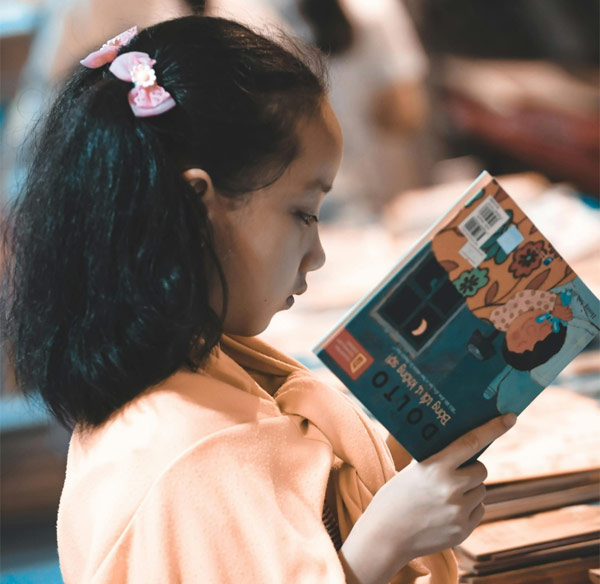
Reading Books: A warm cozy and inviting space equipped with a variety of age-appropriate books, cushions, and seating arrangements where children can explore books independently or with peers. These reading nooks encourage a love for reading and provide opportunities for children to practice emergent literacy skills such as book handling, print awareness, and storytelling.
Phonics and Phonemic Awareness Stations: With the various area of this lab, children will have opportunities to interface with activities and manipulatives that develop phonemic awareness (recognizing and manipulating individual sounds in words) and phonics skills (associating sounds with letters). This may include alphabet puzzles, letter-sound matching games, rhyming activities, and phonics-based songs and chants.
Writing Center: A fun and interactive designated area equipped with writing materials such as, pencils, crayons, markers, paper, and writing tools like chalkboards or whiteboards. Children will be engaged in various writing activities such as drawing, tracing letters, writing their names, and creating stories or journal entries, fostering early writing skills and creativity.
Language and Vocabulary Development: The lab also features vocabulary-building activities, word games, and language exploration tools such as flashcards, word walls, and picture dictionaries. Children can learn new words, explore word meanings, and practice using language in context through interactive experiences and discussions.
Literacy Technology: Integrating age-appropriate technology such as interactive e-books, educational apps, and multimedia resources that support literacy development is an exciting and crafty way to help children develop literacy skills. Children can engage with digital literacy tools that reinforce reading, writing, and language skills while providing additional opportunities for interactive learning and exploration.
Storytelling and Dramatic Play: The ELA Lab has dedicated areas to storytelling, puppetry (puppet theatre, and dramatic play activities where children can act out stories, retell familiar tales, and engage in imaginative play scenarios. This facilitates the development of comprehension skills, oral language proficiency, and narrative understanding through active participation and role-playing.
Teacher Facilitation Area or Community Circle: This is a special space for teachers to lead literacy instruction, provide guided reading sessions, facilitate large group activities, and offer support and feedback to students. In this area the teacher would find it necessary to include resources such as literacy-based lesson plans or curriculum documents, anchor charts, big books, daily charts, and assessment tools to inform instruction, encourage conversation and monitor student progress.
Creativity Is The Best Way Of Seeing Things
Ideally, the ELA lab aims to create a rich literacy environment that nurtures a love for reading and writing while laying the foundation for future academic success. Through engaging and interactive experiences, children develop essential literacy skills, language proficiency, and a deep appreciation for the power of words and storytelling.