We Break Boundaries To Craft Extraordinary Experiences.
Center-based care and education for 3-year-olds provide a nurturing and stimulating environment where children can explore, learn, grow, and thrive, in ways that support their overall development. Thus, setting the stage for readiness for more formal schooling, future academic success, and lifelong learning.
The Atikali Jr. Kindergarten programme delivers the following important benefits for this age group:
Early Learning Foundations: where within a structured environment, children can begin to develop essential academic and social skills, through age-appropriate activities and curriculum designed to support their cognitive, social, emotional, and physical development. Through play-based learning experiences, children are exposed to foundational skills such as early literacy, numeracy, science, and social studies concepts, motor-skills development, problem-solving, and critical thinking, laying a strong foundation for future learning.
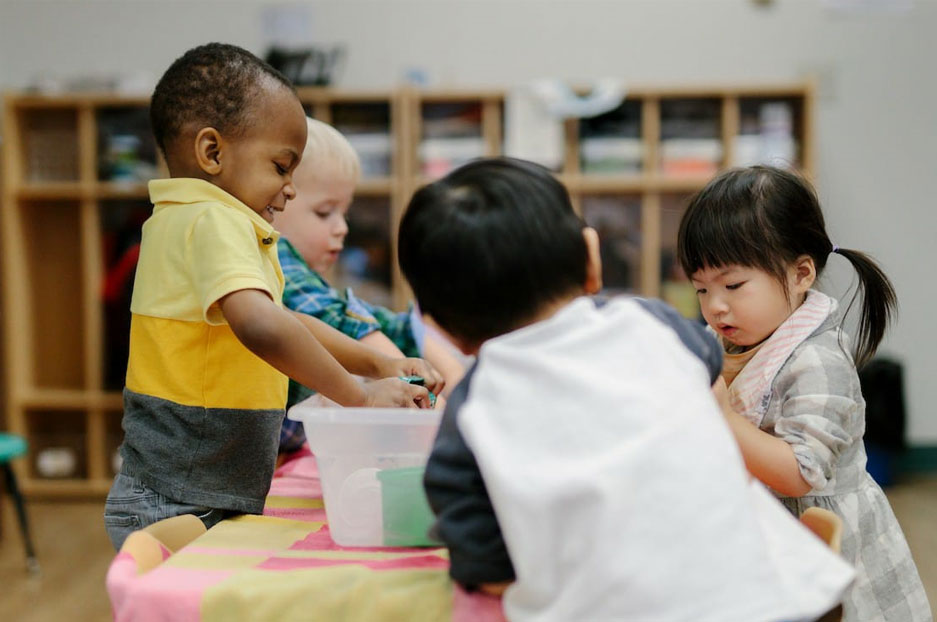
Socialization: where, in a supportive environment, children become exposed to a diverse peer group, allowing them to interact with other children their age while learning and developing important social skills, such as sharing, taking turns, cooperating, and resolving conflicts. These early social experiences help children develop empathy, communication skills, and the ability to build positive relationships, which are crucial for their overall well-being and success in future social contexts.
Language and Communication: where children experience a language-rich environment where they are exposed to a variety of verbal and nonverbal communication experiences, including conversations, storytelling, singing, exposure to a variety of vocabulary, and listening to stories and rhymes. These experiences support children’s language development because they learn to express themselves verbally, listen actively, and comprehend spoken language, which are essential skills for communication and literacy.
Independence and Self-Regulation: so, children can develop independence and self-help skills by providing opportunities for them to make choices, solve problems, and take on responsibilities in a supportive environment. They practice skills like dressing themselves, using the bathroom independently, and following routines. Children also learn to manage their emotions, follow routines, adapt to different situations, and regulate their behavior, which are essential skills for school readiness, success, and overall well-being.
Exposure to Diversity: which provides opportunities for children to interact with peers and adults from diverse backgrounds, cultures, traditions, and experiences. Exposure to diversity promotes acceptance, tolerance, and empathy, helping children develop a positive sense of self and respect for others. Through multicultural activities, celebrations, and exposure to literature and artifacts from different cultures, children learn to respect and value differences, fostering a sense of belonging and inclusivity.
Physical Development: where there are numerous opportunities for children to engage in gross motor activities (e.g., running, jumping, climbing) and fine motor activities (e.g., drawing, painting, cutting) that promote physical development, coordination, and motor skills. These activities help children develop strength, balance, coordination, and spatial awareness, laying the foundation for healthy physical habits and an active lifestyle.
Parental Support: where we offer resources, workshops, and support services for parents, including information on child development, parenting strategies, and community resources. Parent involvement in center-based care strengthens the home-school partnership and supports children’s overall development.